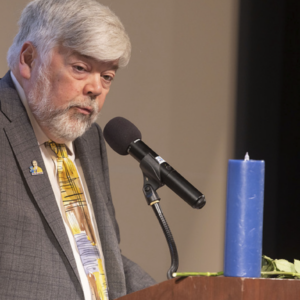
John Cox, former president of Cape Cod Community College, speaking at the 2024 Fall PTK Induction Ceremony (Cape Cod Community College)
By Isabella Cantillano-Sanchez
Revelations regarding former college President Dr. John Cox’s leave of his post places both the administration and environment of Cape Cod Community College in question.
On April 15, 2026, The Boston Globe published an article by reporter Hilary Burns detailing the reasons behind the 4Cs Board of Trustees’ decision to place Cox on paid administrative leave in October and Cox’s subsequent retirement in March.
The article details a severe abuse of power by Cox in his interactions with an unnamed 23-year-old female student, interactions that are repeatedly characterized in the article as an attempt at mentorship. While this might be how Cox chooses to characterize his intentions on the record, the pattern of behavior he exhibited over a period of months can and should be categorized as abuse.
Burns reports that “investigators concluded Cox’s actions did not qualify as sexual harassment, gender-based harassment, discrimination, or retaliation.” This conclusion is insufficient, especially when a glimpse into Cox’s tenure as college president reveals that his name has been linked to an environment in which sexual harassment has been permitted for at least a decade.
On June 15, 2016, Cape Cod Times published an article by reporter Geoff Spillane detailing a “long-simmering dispute” between the faculty and administration of Cape Cod Community College. This dispute stemmed from “an alleged environment of fear, bullying and sexual harassment in the workplace, as well as ineffective leadership and management, according to documents provided to the Times by faculty members.” Ten years later, failure by the college administration to do anything to change that environment has resulted in the disruption of a woman’s life and education. It also makes one wonder: How many other women have been harmed by the environment cultivated by an administration that has shown such disregard for their safety?
Cox’s brazen allocation of college funds specifically for the female student and her partner as well as his correspondence with a member of faculty about their relationship speak to the degree of confidence he must have felt that his behavior would go unchecked.
His confidence was not unfounded. According to the April 15 Globe article, when the female student reported his behavior to Cape Cod Community College chief wellness officer Dr. Maura Weir, Weir did not inform any administrative authorities about the situation. Instead, she confided in a colleague who also did not act on behalf of the student’s safety.
In another Globe article published on April 16, 2026, Burns reported that “Weir discouraged the student from sharing her concerns with most other college students and staff and delayed the appropriate reporting for months.”
Cox being placed on paid leave and retiring without any acknowledgment from the college that he behaved inappropriately toward a female student speaks to a culture of misogyny that exists not only at this school but in our wider culture. This month, two members of United States Congress have resigned amid allegations of sexual misconduct and a former lieutenant governor accused of sexual assault murdered his wife before dying by suicide. That the Cox story and these stories were released within days of each other speaks to the prevalence of this behavior. It also speaks to the necessity for people with positions of power within these institutions to act immediately when such behavior is brought to their attention, and that the systemic abuse of women in our society bears urgent examination.
The college administration has claimed to be dedicated to transparency during and after this investigation, but its words are in direct contrast to its actions, which suggest a prioritization of protecting the legacy of a man and an institution over a woman harmed by both.
It is the administration’s duty to protect all members of the college community, and action must be taken to prevent something like this from happening again. The manner in which the college chooses to proceed will reveal whether anything has been learned from this incident, but it is important to remember that nothing can reverse what the female student experienced. She must live with the trauma of what Cox did, and her ordeal has been publicized. That she has been made a public martyr to this culture of misogyny cannot be in vain. It is time for accountability.